
Mindfulness vs meditation: are they two words for the same thing? Almost everyone uses them interchangeably, and almost everyone is a little bit wrong. The short version is that mindfulness is a quality of attention you can bring to anything, and meditation is the deliberate practice you sit down to do. One is a state. The other is the training. Mindfulness meditation, the phrase that muddles the whole conversation, is simply one type of meditation among many.
If you would never call yourself a "meditator," this distinction is worth two minutes, because it quietly changes what you actually have to do.
Mindfulness vs meditation: the one-sentence difference
Put the two side by side and it gets clean fast.
Mindfulness is the what: paying attention, on purpose, to what is happening right now, without immediately judging it or rushing to fix it.
Meditation is the how: a set-aside block of time where you train that attention deliberately, usually by focusing on something like the breath and noticing each time your mind wanders off.
So the difference between mindfulness and meditation is the difference between a skill and the training session where you build it. You can have the skill without the session, and you can do the session to sharpen the skill. Once you see it that way, the two stop competing for the same slot in your head.
What mindfulness actually is
Mindfulness is a quality of attention, not an activity. It is a way of being present, and it can show up in the middle of anything.
The most cited attempt to pin it down, a proposed operational definition of mindfulness, splits it into two parts: self-regulation of attention, meaning you keep your focus on present experience, and an open, curious, accepting orientation toward whatever shows up. Notice what is absent from that: nothing supernatural, no belief required, no special location.
That is why you can be mindful while washing dishes, walking to a meeting, or listening to someone without silently rehearsing your reply. You are not meditating in those moments. You are being mindful. The state is available anywhere, which is exactly what makes it useful.
What meditation actually is
Meditation is the deliberate practice, the activity you set time aside for. It is what most people picture: eyes closed, attention parked on the breath, coming back every time the mind drifts.
It helps to see meditation as a family rather than a single technique. A widely used framework for the two main styles of meditation describes focused attention, where you hold your attention on one chosen object like the breath and return to it each time it slips, and open monitoring, where you watch whatever arises moment to moment without latching on. Body scans, mantra repetition, and loving-kindness practice are further branches of the same tree.
The common thread is that meditation is time you deliberately spend training attention and how you relate to your own experience. It is the reps. Mindfulness is what those reps build.
So what is mindfulness meditation?
Now the confusing phrase makes sense. Mindfulness meditation is one specific type of meditation: the practice of training that mindful quality of attention, typically through focused attention on the breath and open monitoring of thoughts and sensations as they come and go.
Mindfulness meditation meaning, in plain terms: sit down, pay attention on purpose, notice when you drift, come back, and keep an accepting attitude toward whatever you find. That is the whole loop.
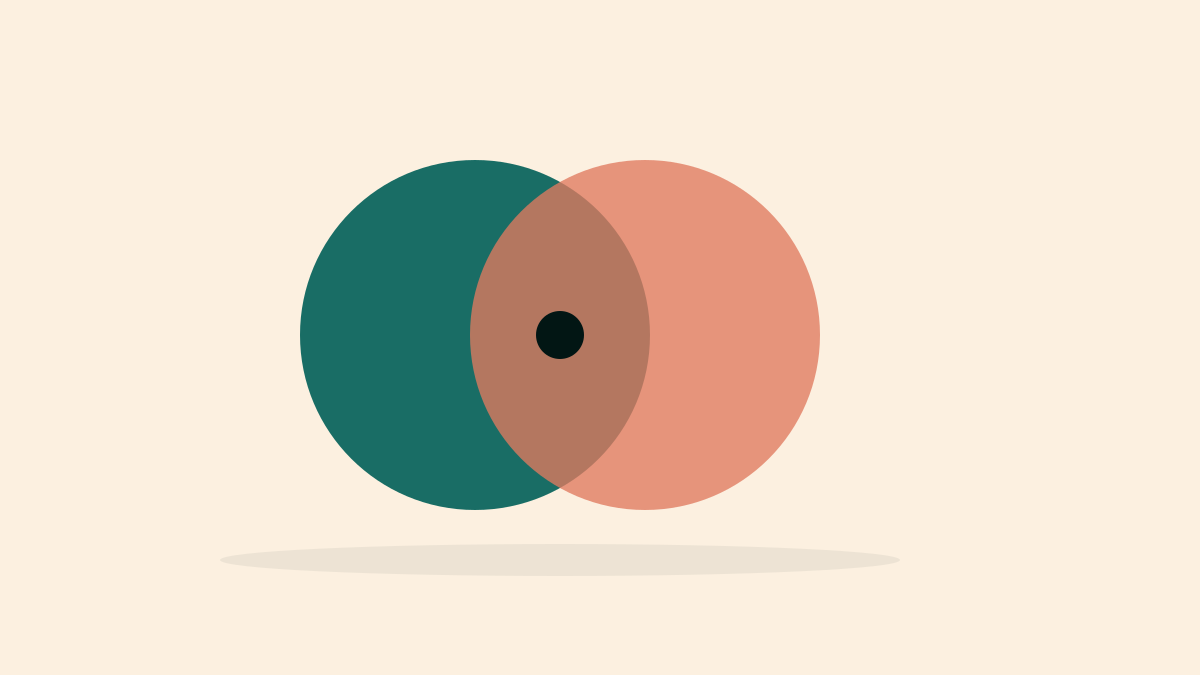
So mindfulness is the broader quality, meditation is the broader practice, and mindfulness meditation is the specific practice aimed at that specific quality. Not every meditation is mindfulness meditation, and mindfulness itself does not require any meditation at all.
A simple framework: are you being mindful or meditating?
Here is a test you can apply in the moment.
You are being mindful when you are in the middle of your day, doing a normal thing, and you deliberately bring your full attention to it. Eyes open, no timer, no posture. Feeling your feet on the floor during a tense call is mindfulness.
You are meditating when you have set aside time specifically to train attention, with no other task competing for it. You have stopped doing everything else, and the practice itself is the point. Ten minutes following your breath is meditation.
Same underlying skill. Different container. And the reason this matters is practical: if you believe the only way to "do mindfulness" is to sit and meditate, you will skip it on the exact days you need it most. If you know mindfulness is a state you can drop into for ten seconds, it is available in the meeting, not just on the cushion.
Which comes first, and does it matter?
For most people, meditation is how you first learn what mindfulness even feels like. It is hard to bring a calm, present quality of attention into a stressful moment if you have never practiced it in a quiet one.
But the formal session is not the destination. Think of meditation as the driving range and daily life as the course. Nobody goes to the range for its own sake. You go so that the swing holds up when it counts. Carrying the attention off the cushion and into an actual argument, deadline, or 3 a.m. spiral is the real goal, and it is the part most people forget to practice.
Where SYLO fits
At SYLO, we treat the meditation session as attention training you then carry into the rest of your day. You describe what is actually on your mind, and the app generates a short personalized session shaped around it, usually in under two minutes. The aim is not to turn you into someone who meditates for its own sake. It is to build the quality of attention you can use in the meeting or the moment your thoughts start spinning.
If the vocabulary trips you up, our glossary defines terms like mindfulness in plain language, and we explain how the sessions are put together in our overview of AI-guided meditation.
We also see the usual confusion up close. As an observation from anonymized usage, not a law, people who arrive skeptical of "meditation" tend to warm up quickly once they realize the goal is a usable skill, not a belief system or a lifestyle. Reframing it as attention training rather than spirituality does most of the work.
FAQ
Is mindfulness the same as meditation?
No. Mindfulness is a quality of attention you can bring to any moment. Meditation is a deliberate practice you set time aside for. Mindfulness meditation is one type of meditation aimed at building that quality.
Can you be mindful without meditating?
Yes. You can be mindful while walking, eating, or listening, with no formal practice at all. Meditation makes the state easier to reach and hold, but it is not the only way to be mindful.
What is mindfulness meditation?
Mindfulness meditation is a specific practice: you focus attention, often on the breath, notice when your mind wanders, gently return, and hold an open, non-judgmental attitude toward whatever comes up.
Which is better for beginners, mindfulness or meditation?
They are not competitors. Most beginners use short meditation sessions to learn what mindful attention feels like, then practice bringing that same attention into ordinary moments. Start with a few minutes of meditation, then carry it into your day.
The distinction that dissolves the objections
Here is what you actually gain by keeping these two words apart. A surprising number of common objections quietly sort themselves out.
"I can't clear my mind" is an objection about meditation, and clearing the mind was never the point in the first place, which we take apart in our piece on common meditation myths. "It feels too spiritual for me" is usually about packaging rather than the practice, something we address in whether meditation is religious or spiritual.
Meditation vs mindfulness is a small distinction, but it is the one that lets you stop treating attention as something mystical and start treating it as something you train. The state is free and always available. The practice is how you make it reliable.