
Most pain advice online promises too much. The honest picture is narrower and more useful. A systematic review and meta-analysis in Annals of Behavioral Medicine found low-quality evidence that mindfulness meditation is associated with a small decrease in pain, plus improvements in depression symptoms and quality of life. That is the real headline for meditation for chronic pain: not a cure, not magic, but a modest and worthwhile shift in how pain lands.
This article is about the mechanism, not the mysticism. There is no healing energy here and nothing to believe in. Meditation does not remove the physical source of your pain. What the research suggests it changes is the way your brain processes that pain, and for people living with pain every day, that difference is not small.
What meditation for chronic pain can and cannot do
Start with the boundary. Meditation does not repair a herniated disc, calm an inflamed joint, or fix nerve damage. If there is a treatable cause, meditation is not the treatment for it.
What it can influence is the second layer of pain: the appraisal, the tension, the fear, and the exhaustion that build up around a persistent physical signal. Chronic pain, defined as pain that lasts longer than three months, is rarely just a sensation. It is a sensation plus everything your nervous system and your mood do in response to it, and that second layer is where attention training gets a foothold.
This is why the honest framing matters. Anyone selling meditation as a way to make pain vanish is overselling it. The realistic promise is that you can change your relationship to the pain, reduce the suffering stacked on top of it, and often reclaim some function you had written off.
The mechanism: it changes how the brain processes pain
Here is the part that makes meditation for chronic pain credible rather than wishful. Pain is not a single readout from the body. It is constructed in the brain from sensory input plus emotional and cognitive appraisal, and those parts can be pulled apart.
Neuroimaging work led by Fadel Zeidan describes a mechanistic account in which meditation reduces pain through cognitive and emotional evaluation rather than by blocking the sensory signal at its source. In these studies, pain relief tracked with activity in brain regions involved in how pain is appraised and interpreted, not with a simple dampening of raw sensory input. Notably, the effect was not reversed by a drug that blocks opioid receptors, which suggests meditation is not just an internal painkiller or a plain placebo response.
One frequently cited experiment shows how large that reappraisal can be. In healthy adults given brief thermal pain, mindfulness meditation reduced pain unpleasantness by 57 percent and pain intensity by 40 percent. Two honest caveats: those were healthy volunteers exposed to short, experimental pain, not people with chronic conditions, and unpleasantness dropped more than intensity. So do not expect a 40 percent cut in your own long-term pain from these numbers. But the direction is the point. The "how much it hurts to me" component moved even more than the "how strong it is" component.
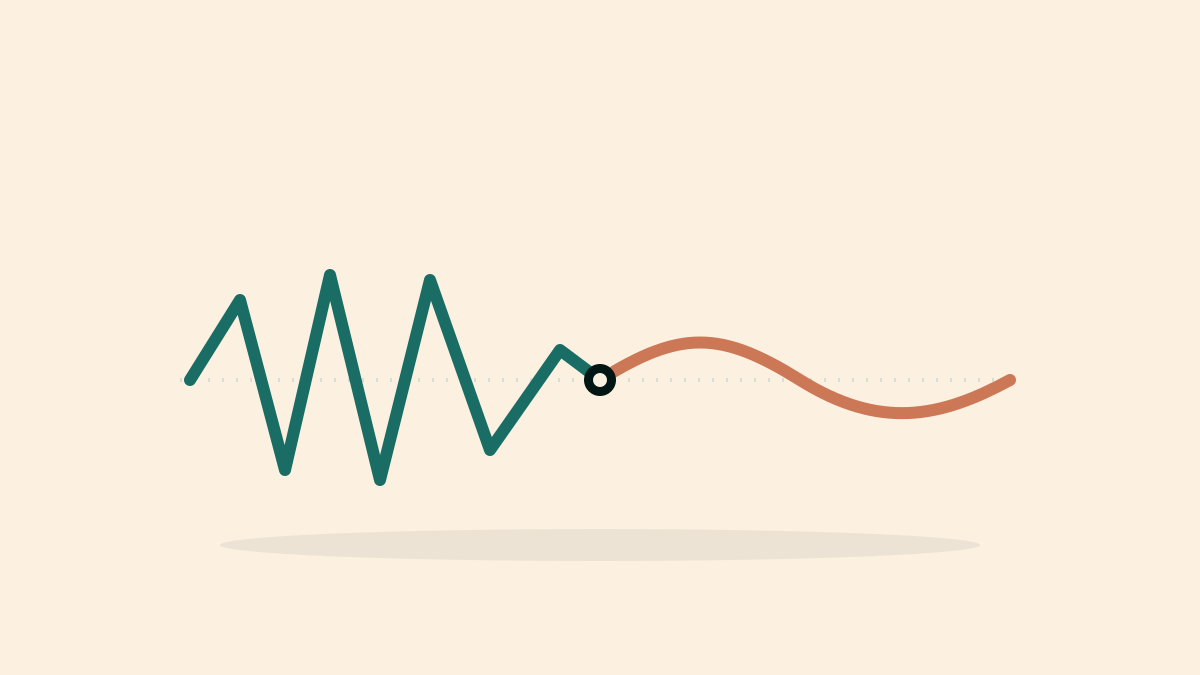
That split between sensation and suffering is the whole game. Meditation seems to loosen the automatic reaction that turns a signal into distress. Part of that is nervous-system down-regulation, the same calming response we cover in our explainer on the vagus nerve and how the body switches out of high alert, which is worth understanding because stress and bracing tend to amplify pain.
What the effect sizes really show
Precision matters on a topic like this, so let us be precise. The meta-analysis above rated its evidence as low quality and its pain benefit as small. That is not a reason to dismiss it, but it is a reason not to promise more than the data holds.
Where the evidence gets more concrete is in trials on specific conditions. In a randomized trial in JAMA comparing mindfulness-based stress reduction with usual care for chronic low back pain, 60.5 percent of the mindfulness group had a clinically meaningful improvement in function at 26 weeks, versus 44.1 percent with usual care. Meaningful improvement in how much the pain bothered them reached 43.6 percent, against 26.6 percent for usual care. Those gains held at one year.
Read those numbers carefully. Mindfulness beat usual care, and the benefit lasted, but plenty of people in the mindfulness group did not hit the improvement threshold. This is a real, durable, moderate effect. It is not a guarantee, and it is not for everyone. That mix of "genuinely helps many, cures no one" is exactly what you should expect from a legitimate mind-body approach, and it is more trustworthy than a clean success story.
Stress and low mood also feed the pain loop, which is why the broader finding that meditation can reduce stress and anxiety is relevant here rather than a separate topic. Less arousal and less rumination generally mean a nervous system that is less primed to amplify pain.
A practical framework you can try
You do not need a retreat or a special posture. You need a repeatable way to practise noticing sensation without immediately fighting it. Here is a simple framework built from what the research rewards.
- Keep it short and frequent. Five to ten minutes most days beats one heroic session. Consistency is what let people in the structured trials build the skill over weeks.
- Get comfortable first. Sitting rigidly through pain teaches your body to brace. Lie down or support the painful area. Comfort is not cheating.
- Anchor on the breath, then widen. Spend a minute following the breath, then gently bring attention to the area that hurts. The aim is not to make it stop.
- Separate sensation from story. Notice the raw qualities, warm, tight, sharp, pulsing, without the running commentary of "this is ruining my day." That gap between sensation and suffering is the exact thing the brain research points to.
- Let it be uncomfortable, not overwhelming. If turning toward the pain spikes distress, back off, return to the breath, and keep sessions gentle. Pushing hard is counterproductive, a point worth reading alongside what meditation's side effects and limits actually are.
The goal of this practice is not to win a fight with your body. It is to spend a few minutes not at war with it, and to let that stance carry into the rest of your day.
At SYLO, this is one of the things a personalized session can be shaped around. Instead of a generic track, you describe what you are dealing with, and the AI-guided meditation can be built toward body-based attention and pain-coping rather than sleep or focus. To be clear about the limits: SYLO is not a medical device, it does not treat pain, and it is not a substitute for care. It is a way to make the coping practice easier to actually do.
When to see a doctor
Meditation sits on top of medical care, never in place of it. This is the same logic as the reason meditation does not replace therapy: it is a self-regulation skill, not a diagnosis or a treatment.
See a doctor rather than reaching for meditation if your pain is new, sudden, or severe, if it follows an injury, or if it is getting worse instead of better. Certain signs need prompt medical attention, including pain with fever, numbness or weakness, loss of bladder or bowel control, or unexplained weight loss. Do not use meditation to talk yourself out of getting a symptom checked.
And do not change your pain treatment on your own. If meditation helps and you are wondering about your medication, that is a conversation to have with your clinician, not a decision to make alone. The most sustainable setup is meditation working quietly alongside proper medical care, each doing the part it is actually good at.
FAQ
Can meditation really help with chronic pain?
Research suggests it can help modestly. A large meta-analysis found low-quality evidence that mindfulness meditation is linked to a small reduction in pain, along with improvements in depression symptoms and quality of life. It does not remove the physical cause of pain. What it seems to change is how the brain processes and appraises pain, which can make the pain more bearable and improve day-to-day function. Treat it as a complement to medical care, not a replacement.
How long does it take for meditation to help with pain?
There is no fixed timeline, and it varies a lot between people. In laboratory studies, even a few short sessions changed how healthy volunteers rated experimental pain, but chronic pain is different and slower to shift. In the structured trials that showed benefit, people practised over roughly eight weeks. A realistic expectation is small, gradual changes in coping and function over weeks of regular short practice, not an instant switch-off.
Is meditation better than medication for chronic pain?
That is the wrong comparison. Meditation is not a substitute for medical treatment, and you should never stop or change prescribed medication without talking to your doctor. Meditation works on a different layer, the way you relate to and cope with pain, so for many people it sits alongside medical care rather than replacing any part of it. Discuss any changes to your pain treatment with a clinician.
What type of meditation is best for chronic pain?
Most of the evidence comes from mindfulness-based approaches, including mindfulness-based stress reduction, which train attention toward present-moment sensation without fighting it. Body-based attention practices that help you notice sensation with less reactivity tend to be the most studied for pain. Shorter, gentler, guided sessions are usually a better starting point than long silent sitting, especially if pain makes it hard to stay still.
If you take one idea from all of this, make it the split between sensation and suffering. Medicine works on the sensation, and it should. Meditation gives you a small, trainable amount of leverage over the suffering that gets built on top, and for a lot of people that leverage is the difference between pain running the day and pain merely being in it.
Sources
- Mindfulness Meditation for Chronic Pain: Systematic Review and Meta-analysis
- Mindfulness meditation-based pain relief: a mechanistic account
- Brain mechanisms supporting the modulation of pain by mindfulness meditation
- Effect of Mindfulness-Based Stress Reduction vs Cognitive Behavioral Therapy or Usual Care on Chronic Low Back Pain
- Acute vs. Chronic Pain, Cleveland Clinic