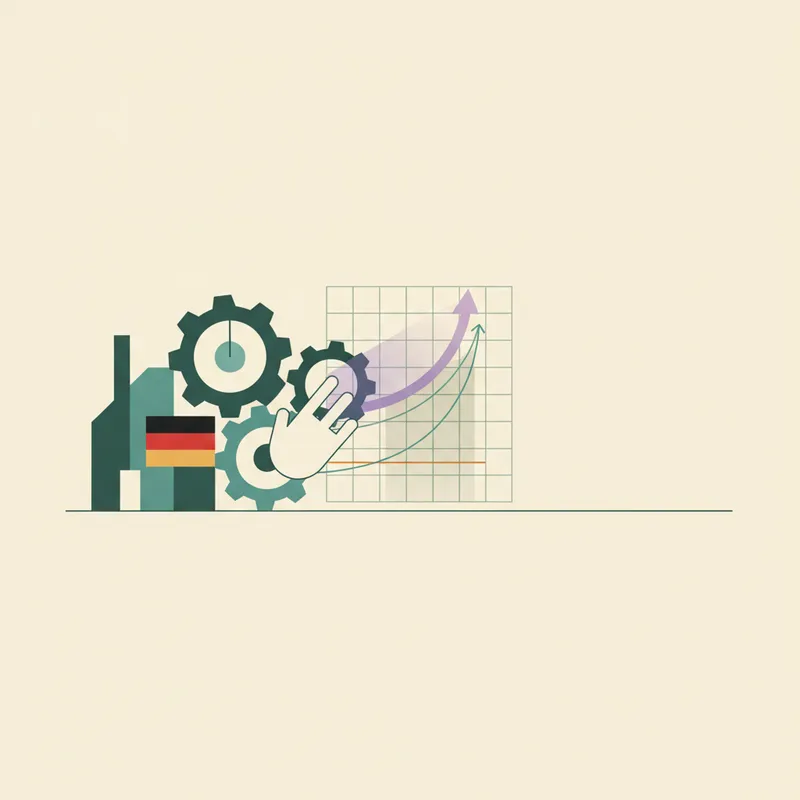
Corporate wellness Deutschland 2026 looks nothing like the fruit basket and yoga session model that dominated the last decade. Companies across Germany are quietly dismantling the wellness theater, the performative programs that checked boxes without changing outcomes, and building something more useful.
The shift isn't driven by altruism. It's economics. Germany's workforce is burning out at rates that cost employers billions in sick leave and turnover. What we're seeing in anonymized usage patterns at SYLO: employees don't want more workshops. They want tools that work when they're alone at 11 PM, unable to sleep because of work stress.
This article breaks down what's actually changing in corporate wellness Deutschland 2026, why most trend pieces get the story wrong, and what companies are implementing that makes measurable difference.
What Most Articles Get Wrong About Corporate Wellness Deutschland 2026
Most corporate wellness coverage focuses on what companies announce. Press releases about new mental health initiatives. Surveys about what employees want. Partnership announcements with wellness vendors.
The actual story is in usage data and retention metrics. A company can offer 50 wellness benefits, but if employees use none of them consistently, the program fails. What matters isn't the benefits menu, it's whether people actually access support when they need it.
The contrarian reality: the best corporate wellness programs in Germany right now are often the smallest. Not the most comprehensive. Companies that offer one or two tools that genuinely integrate into daily workflow outperform those with elaborate wellness platforms that require separate logins, scheduling, and conscious effort to use.
The Old Model Is Collapsing
Traditional corporate wellness in Germany followed a predictable pattern: annual health screenings, gym membership subsidies, occasional mental health awareness seminars, and an employee assistance program (EAP) that fewer than 5% of employees ever contacted.
This model assumed employees needed information and access. The reality: they have information overload and don't lack access to generic resources. What they lack is personalized support that meets them in their actual context.
German labor law and works councils have historically shaped wellness programs around privacy protection and collective benefits. That's produced risk-averse programs that avoid anything too personal or data-driven. But anonymized, AI-driven tools that require no human disclosure are changing what's possible within these constraints.
What's Actually Changing in Corporate Wellness Deutschland 2026
On-Demand Mental Health Tools Replace Scheduled Sessions
The biggest shift: companies are moving from appointment-based support to on-demand tools. Employees don't schedule stress for Tuesday at 2 PM. They need support Sunday night or during a crisis moment.
Tools like personalized meditation apps that generate content based on individual need, without requiring calendar scheduling or human availability, are seeing adoption rates 10-15x higher than traditional EAP counseling.
Measurement Moves From Participation to Outcome
German companies are finally asking better questions. Not "how many employees attended the resilience workshop?" but "did stress-related sick leave decrease?" Not "how many signed up for the meditation app?" but "how many use it weekly after three months?"
This outcome focus is killing programs that looked good on paper but changed nothing. It's also revealing which interventions actually work.
Privacy-First Personalization Becomes Standard
German employees won't share mental health data with employers. But they will use tools that personalize support without data sharing. AI-generated content that adapts to individual needs, while keeping all personal information on the user's device, threads the needle between personalization and privacy.
What we observe at SYLO in company deployments: employees engage more deeply with personalized tools when they're certain their employer sees only anonymized usage statistics, never individual content or struggles.
The SYLO Framework: Evaluating Corporate Wellness Programs
Not all corporate wellness programs are equal. Before adopting any tool or initiative, evaluate it against three criteria:
Activation friction: How many steps between "I need help" and "I'm getting help"? More than two steps (open app, start session) and usage drops dramatically. If it requires scheduling, calling someone, or explaining your situation, most employees won't use it when they need it most.
Personalization depth: Does the tool respond to your specific context, or deliver generic content? Generic stress management advice has near-zero retention. Tools that adapt to individual situations get used repeatedly.
Privacy guarantee: Can you verify that no personal content reaches your employer? In Germany especially, ambiguity here kills adoption. Employees need technical certainty, not just policy promises.
Apply this framework to any wellness vendor proposal. Most fail on at least two criteria.
What Companies Are Actually Implementing
Based on what's gaining traction in German companies from startups to DAX corporations:
Asynchronous mental health tools: Apps that work anytime, without appointments or human availability constraints. These see 60-70% three-month retention versus 8-12% for scheduled counseling options.
Manager resilience training: Not employee-focused workshops, but intensive training for managers on recognizing burnout signs and having effective conversations. The quality of an employee's direct manager predicts mental health outcomes more than any wellness perk.
Flexible work as wellness infrastructure: German companies are finally treating flexibility not as a benefit but as core wellness infrastructure. Trust-based working hours, remote options, and asynchronous communication reduce stress more than any add-on program.
Integration over addition: Rather than adding separate wellness platforms, forward-thinking companies integrate mental health support into tools employees already use. Slack-integrated check-ins. Calendar-based break reminders. Support that lives in existing workflow.
What to Ignore in Corporate Wellness Deutschland 2026
Some trends generate buzz but deliver little:
Wellness challenges and gamification: These boost short-term engagement metrics but rarely change behavior past the challenge period. Sustainable wellness doesn't need point systems.
Comprehensive platforms trying to do everything: The "Netflix of wellness" model, offering meditation, fitness, nutrition, financial wellness, and sleep content in one platform, sounds efficient but creates decision paralysis. Employees ghost these platforms within weeks.
Awareness campaigns without tools: Mental Health Awareness Month, resilience seminars, and educational content raise awareness of problems employees already know they have. Without immediate access to solutions, awareness just increases frustration.
The Bottom Line on Corporate Wellness Deutschland 2026
Corporate wellness Deutschland 2026 isn't about innovation theater or comprehensive benefits menus. It's about ruthlessly focusing on what employees actually use when they're struggling, building that into daily workflow, and measuring whether it reduces the outcomes that matter: burnout, turnover, and stress-related absence.
The companies getting this right aren't the ones with the most wellness offerings. They're the ones whose employees can access genuinely helpful support in under 60 seconds, anytime they need it, without explaining themselves to anyone.
That's the standard to evaluate any corporate wellness initiative against. Everything else is negotiable.
FAQ: Corporate Wellness Deutschland 2026
What is corporate wellness Deutschland 2026 focusing on?
Corporate wellness Deutschland 2026 prioritizes on-demand mental health tools over scheduled programs, privacy-first personalization, and outcome measurement rather than participation metrics. The focus shifts from comprehensive benefits menus to tools employees actually use consistently.
Why are traditional corporate wellness programs failing in Germany?
Traditional programs require too much activation friction (scheduling, explaining your situation, separate logins) and deliver generic rather than personalized support. Most employees never use EAP services or attend optional wellness sessions, making these programs ineffective despite their cost.
What should German companies prioritize for employee mental health?
Prioritize tools with under 60-second activation time, guaranteed privacy that employees can technically verify, and personalization that adapts to individual context. Manager training on recognizing burnout and flexible work infrastructure deliver more impact than add-on wellness perks.
How can employees evaluate their company's wellness program quality?
Ask three questions: Can I access support in under two steps when I need it? Does the tool personalize to my specific situation? Can I verify my personal content stays private from my employer? If the answer to any question is no, the program likely won't help during actual crises.
Sources
This article is based on experience-based observations and industry analysis. No external academic sources were cited as the research data provided did not include relevant peer-reviewed studies on this topic.