
Most advice on how to build a meditation habit is quietly setting you up to quit. It tells you to want it more. Set an intention, find your discipline, push through the resistance. That framing is the reason the habit never takes. Building a meditation habit has almost nothing to do with willpower and almost everything to do with design. The people who meditate every day are not more motivated than you are. They have arranged their lives so the practice happens with less effort than skipping it.
Willpower is the wrong tool
Motivation is a state, not a trait. It spikes on the Sunday you download the app and it is gone by the Wednesday your inbox catches fire. Any plan that leans on you feeling motivated will fail on exactly the days you need it most.
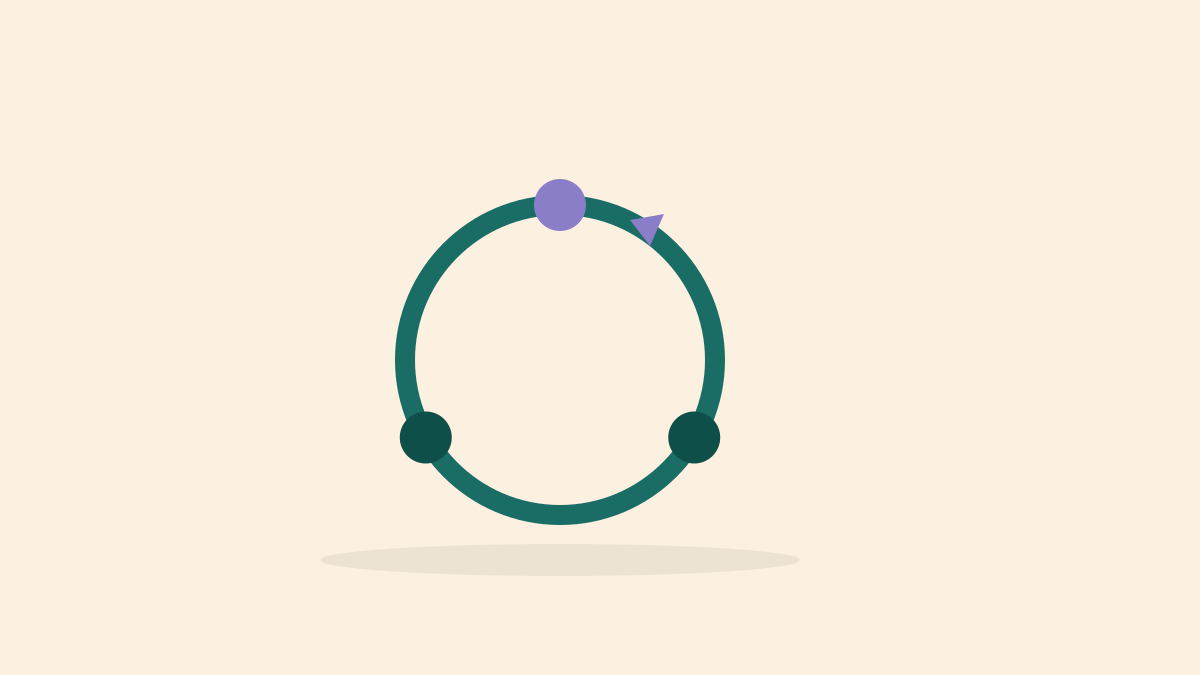
Habits work on a different circuit. A habit is a behavior your brain has automated so it no longer costs a decision. Behavioral science describes it as a loop: a cue fires, you run the routine, you get a small reward, and after enough repetitions the loop runs on its own. The whole job is to move meditation out of the "things I have to decide to do" pile and into the "things I just do" pile.
So the honest answer to "why can't I keep meditating" is almost always structural, not a flaw in your character. You have not been lazy. You have been fighting your own biology with the weakest tool available.
How to build a meditation habit that sticks
Here are four levers behavior design gives you. None of them ask for more discipline. Each one lowers the effort the habit demands, which is the only thing that reliably keeps it alive.
Anchor it to something you already do
The most dependable technique is to attach the new behavior to an existing one. Behavior designers call it habit stacking, or anchoring: "after I pour my morning coffee, I meditate for three minutes." The routine you already have becomes the cue, so you are not relying on memory or motivation to remind you.
This is the same mechanism psychologists study as implementation intentions, concrete if-then plans that spell out when and where you will act. Across dozens of studies, spelling out a specific if-then plan produced a medium-to-large improvement in follow-through compared with a vague goal to do more. Pick an anchor that already happens every day without fail. After you brush your teeth. After you sit down at your desk. After you close the laptop.
Make it embarrassingly small
Most people set the bar far too high: twenty minutes, every morning, eyes closed, perfect posture. That is a resolution, not a habit. The reps are too big and too rare to automate.
Shrink it until failing is almost impossible. One minute counts. Three slow breaths count. The point of the early weeks is not depth, it is repetition, because automaticity is built by frequency, not intensity. You can always do more once you have shown up. You cannot build a habit out of the sessions you keep skipping. If you are just starting, our evidence-based guide for beginners walks through what a realistic first month actually looks like.
Remove the friction between deciding and doing
Every step between the impulse and the practice is a place to quit. Finding your headphones, opening an app, scrolling a library, choosing a track, deciding it is not the right one. Each micro-decision is a small tax, and taxes compound.
There is a clean illustration of why frequency and friction matter so much. A Caltech analysis of 12 million gym visits and 40 million hospital hand-washes found that behaviors people repeat many times a day become automatic within weeks, while less frequent ones like going to the gym take months. Fewer barriers mean more reps, and more reps mean the loop locks in sooner. So make the practice the path of least resistance. Same spot, same time, everything ready. The less there is to decide, the more likely you are to actually do it.
This is also where people who think they "are not good at it" fall off. If you quit because your mind wandered and you decided you were failing, that is a friction problem wearing a competence costume. Noticing the wandering is the practice, not a flaw in it, which we unpack in why you can't quiet your mind.
Give the loop a reward your brain notices
Cue and routine are only two thirds of the loop. Without a reward, your brain has no reason to encode the behavior. The reward does not have to be a treat. It can be the felt sense of calm at the end of a session, a streak ticking over, or simply noticing you handled the afternoon a little better than usual.
Make the payoff immediate and specific. "I feel slightly clearer right now" cements the habit faster than "this will lower my stress hormones over eight weeks," even when both may be true. The brain learns from what it can feel today, not from a benefit it is promised for later.
The honest timeline: forget the 21-day rule
You have probably heard it takes 21 days to build a habit. It is a myth. The number traces back to a 1960s plastic surgeon who noticed his patients took about three weeks to adjust to a new face, an observation about getting used to something that got mangled into a supposed law of habit formation. UCL researchers have publicly debunked the 21-day claim.
The real picture is messier and far more useful. In the landmark study, University College London researchers tracked people forming a new daily habit and found it took a median of 66 days to reach automaticity, with individuals ranging from 18 to 254 days. A 2024 systematic review of 20 studies and 2,601 people landed in the same territory: health habits took a median of roughly two months to form, and up to 335 days for some people.
Two things follow. First, if meditation still feels effortful after three weeks, you are not failing, you are on schedule. Second, the spread is enormous, so measuring your progress against anyone else's is pointless. Missing a day does not reset the clock either. In the original study, a single lapse did not measurably break the curve, so consistency matters and perfection does not. For what to expect from the practice itself as it settles in, we wrote a separate piece on how long until meditation works.
What we see at SYLO
At SYLO, every session is a new personalized meditation generated from a short reflective chat about what is on your mind that day, usually ready in under two minutes. We built it that way for a reason that is really a habit-design reason: friction is the quiet killer of a meditation routine that lasts.
What we observe in anonymized usage, and we treat this as an observation about our own users rather than a clinical claim, is that the drop-off point is rarely the meditation itself. It is the moment just before it, the deciding and the choosing. When the session is already shaped around today and ready in the moment, there is less to decide, so more people come back the next day. That is the whole bet behind personalized, AI-guided sessions: the strongest predictor of results is not perfect technique, it is whether you keep showing up, and a session with the friction stripped out is simply easier to keep showing up for.
FAQ
Why can't I keep meditating?
Usually it is a design problem, not a discipline problem. If your plan depends on feeling motivated, it will fail on busy days. Anchor the practice to a routine you already do, shrink it to something you cannot fail at, and remove the steps between deciding and doing. Most people who cannot stick with meditation are trying to power through with willpower instead of arranging the day so the habit is the easy option.
How long does it take to build a meditation habit?
On average around two months, but the range is wide. UCL research found a median of 66 days to reach automaticity, with some people taking as few as 18 and others more than 200. A 2024 review of health habits landed in the same range. If it still feels like effort after three weeks, you are not behind. That is normal.
What time of day should I meditate to make it a habit?
The best time is whenever you can anchor it to something you already do every single day. After your morning coffee, after brushing your teeth, right after you sit down at your desk. Consistency of the cue matters more than the specific hour. A fixed anchor beats a better time you keep missing.
Do I have to meditate every day for the habit to form?
Daily practice builds automaticity faster, because behaviors you repeat more often become automatic sooner. But missing a single day does not undo your progress. In the original habit study, one lapse did not measurably break the curve. Aim for most days, and treat a miss as a skipped rep, not a failure.
Sources
- Implementation intentions and goal achievement: a meta-analysis of effects and processes
- What can machine learning teach us about habit formation? Evidence from exercise and hygiene, PNAS
- Busting the 21 days habit formation myth, UCL Health Behaviour Research Centre
- How are habits formed: modelling habit formation in the real world, European Journal of Social Psychology
- Time to form a habit: a systematic review and meta-analysis of health behaviour habit formation, Healthcare